Telehealth for Perimenopause: What to Expect
Virtual menopause care expanded rapidly. Here is how to get the most from a video visit and when you still need in-person evaluation.
Verified against Clinical Guidelines
This article was developed and verified against current clinical standards from NAMS, BMS, and the STRAW+10 staging framework.
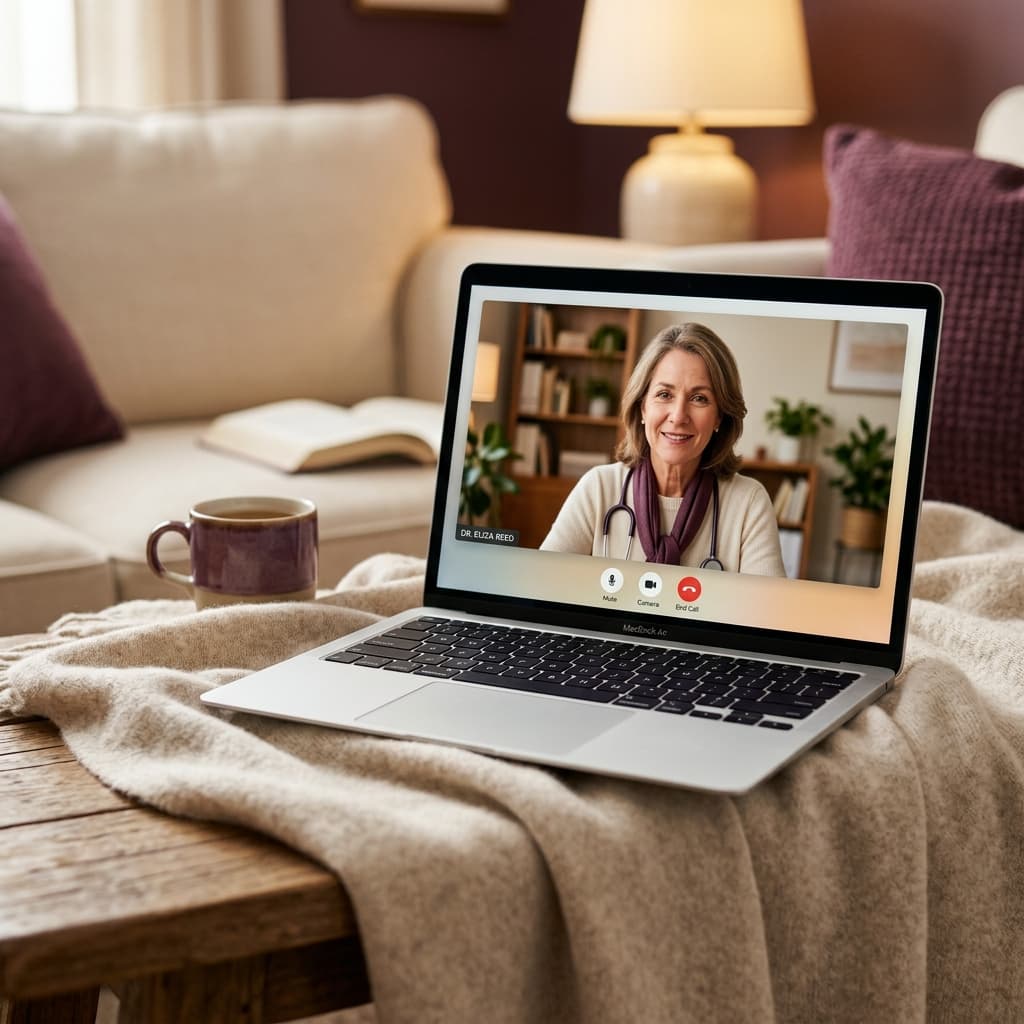
Telehealth works well for history-heavy consultations: symptom review, risk discussion, prescription planning, and follow-up titration. It is less suited to every pelvic exam indication or urgent cardiac symptom—but those belong in person anyway.
Before the appointment
- Upload or print a symptom timeline and medication list.
- List your blood pressure readings if you have a home cuff.
- Note cycle changes with approximate dates.
After the appointment
Ask for a written summary of the plan, follow-up intervals, and what to monitor if starting therapy. Tracking apps help you report back with data instead of memory.
Related on Periwell
Next step
See telehealth-style provider profiles
Our directory includes telehealth-first options and state coverage patterns you can compare to real services in your area.
Open Find a provider →Keep reading
- How to Find a Menopause-Informed Doctor (2026)
Certifications, clinic models, and questions to ask—so you spend less time educating your provider and more time getting care.
- Perimenopause at Work: Reasonable Adjustments That Help
Perimenopause at work: symptoms can disrupt focus, temperature control, and energy. A guide to adjustments, how to raise the conversation, and your rights.
- Perimenopause and Bone Loss: What to Know About Osteoporosis
Bone loss accelerates in perimenopause before symptoms appear. Learn why, what a DEXA scan tells you, and how to protect your skeleton now.